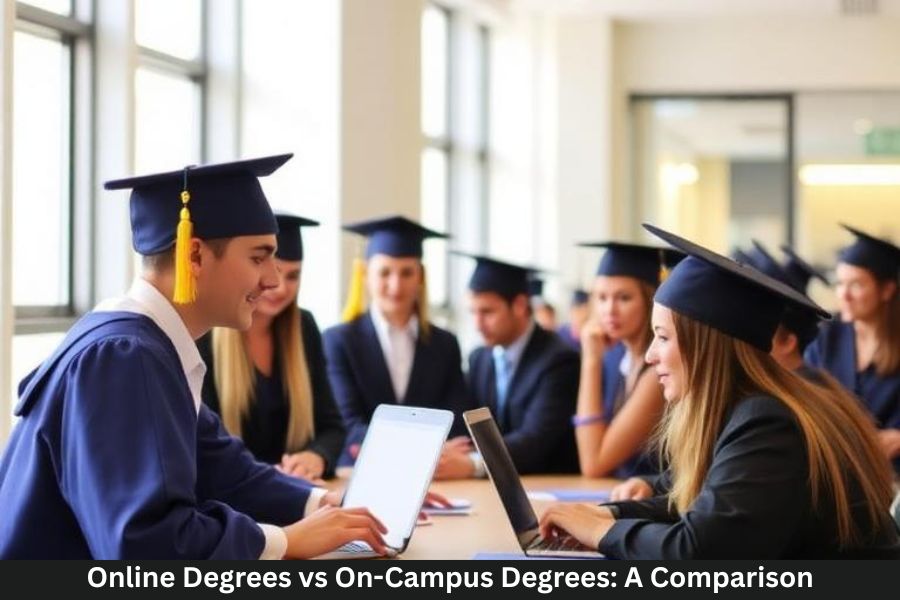
Choosing between an online degree and an on-campus degree is one of the most important decisions students make when planning their higher education journey. With the rapid growth of digital learning platforms and traditional universities continuing to offer immersive campus experiences, both options come with unique advantages and challenges.
In this comprehensive guide, we’ll compare online degrees vs on-campus degrees in terms of flexibility, cost, learning experience, career opportunities, and overall student life to help you make the right choice.
What Is an Online Degree?
An online degree is a program delivered primarily through digital platforms. Students attend lectures virtually, submit assignments online, and communicate with professors via email, discussion boards, or video conferencing tools.
Institutions like Indira Gandhi National Open University and global platforms such as Coursera have made online education more accessible than ever.
Online degrees can be fully remote or hybrid (a mix of online and occasional campus sessions).
What Is an On-Campus Degree?
An on-campus degree requires students to attend classes physically at a university or college campus. This traditional format includes face-to-face lectures, laboratory sessions, group discussions, campus events, and extracurricular activities.
Prestigious institutions such as University of Delhi and Harvard University primarily offer on-campus programs, although many now provide online alternatives as well.
Flexibility: Which Option Fits Your Schedule?
Online Degrees: High Flexibility
One of the biggest advantages of online degrees is flexibility. Students can:
- Study from anywhere
- Access recorded lectures
- Learn at their own pace (in many programs)
- Balance work and studies easily
This makes online education ideal for working professionals, parents, or students living in remote areas.
On-Campus Degrees: Structured Schedule
On-campus programs follow fixed timetables. Students must attend classes at specific times and locations. While this reduces flexibility, it helps maintain discipline and consistent academic engagement.
If you thrive in structured environments, on-campus learning may suit you better.
Cost Comparison: Online vs On-Campus Degrees
Online Degrees: Generally More Affordable
Online programs often have:
- Lower tuition fees
- No hostel or commuting costs
- Fewer additional campus charges
Students save money on accommodation, transportation, and campus facilities.
On-Campus Degrees: Higher Overall Expenses
Traditional degrees usually involve:
- Tuition fees
- Hostel or rental costs
- Transportation expenses
- Campus activity fees
However, they may provide better access to scholarships and campus-based financial aid.
Learning Experience and Interaction
Online Learning Experience
Online education relies heavily on digital communication. Interaction happens through:
- Video lectures
- Discussion forums
- Virtual group projects
While technology bridges the gap, some students may feel less connected compared to physical classrooms.
On-Campus Learning Experience
Campus learning offers:
- Face-to-face interaction with professors
- Immediate doubt clarification
- Hands-on laboratory experience
- Peer collaboration in real-time
Courses like medicine, engineering, and fine arts often benefit significantly from in-person training.
Networking Opportunities
Online Degrees
Networking in online programs happens through:
- Virtual alumni networks
- LinkedIn groups
- Online workshops and webinars
Although effective, building strong personal connections can be more challenging.
On-Campus Degrees
On-campus education provides:
- Campus events and seminars
- Student clubs and organizations
- Internship fairs
- Direct interaction with industry experts
These opportunities often help students build strong professional networks early in their careers.
Career Recognition and Employer Perception
In recent years, employer acceptance of online degrees has improved significantly. Especially after the global shift toward remote work, companies now recognize the value of digital education.
However, the credibility of an online degree depends heavily on the institution offering it. Degrees from recognized universities carry more weight than those from unaccredited providers.
On-campus degrees still enjoy traditional prestige, especially from well-known universities. Employers often value the holistic development that campus life provides.
Self-Discipline and Learning Style
Online degrees require:
- Strong time management
- Self-motivation
- Independent learning skills
Students who struggle with procrastination may find online learning challenging.
On-campus degrees provide external structure and accountability, which helps students stay focused and disciplined.
Social Life and Campus Experience
Online Students
Online learners may miss out on:
- Campus festivals
- Group activities
- Sports competitions
- Hostel life experiences
However, they can still engage socially through local communities or digital platforms.
On-Campus Students
Campus life offers:
- Friendships and shared experiences
- Cultural events
- Clubs and societies
- Leadership opportunities
These experiences often shape personality development and lifelong memories.
Technology Requirements
Online education requires:
- Stable internet connection
- Laptop or desktop
- Familiarity with digital tools
On-campus education requires minimal technical setup beyond standard academic needs.
Students in areas with limited internet access may face challenges in fully online programs.
Which Is Better: Online or On-Campus?
There is no universal answer. The right choice depends on:
- Your career goals
- Financial situation
- Learning style
- Personal responsibilities
- Need for flexibility
Choose an online degree if you:
- Need flexible study hours
- Are working full-time
- Want to reduce costs
- Prefer self-paced learning
Choose an on-campus degree if you:
- Value in-person interaction
- Want full campus experience
- Need hands-on training
- Prefer structured learning
FAQs: Online Degrees vs On-Campus Degrees
1. Are online degrees valid for government jobs?
Yes, online degrees from recognized and accredited universities are generally valid. Always verify the institution’s accreditation status before enrolling.
2. Do employers prefer on-campus degrees?
Some traditional industries may prefer on-campus graduates, but many employers now value skills and experience over study mode.
3. Is an online degree cheaper than an on-campus degree?
In most cases, yes. Online programs usually cost less due to lower operational expenses and no accommodation costs.
4. Can I switch from online to on-campus learning?
Some universities offer hybrid options or allow transfers, but policies vary by institution.
5. Which option is better for working professionals?
Online degrees are generally more suitable for working professionals due to their flexibility.