Imagine being able to try on clothes while sitting on your couch, sipping coffee, and scrolling through your favorite shopping app. Sounds futuristic? It’s already happening. Augmented Reality (AR) fitting rooms are transforming how we shop online by blending digital elements into our real-world environment. Instead of guessing how a dress, jacket, or pair of sneakers might look on you, AR technology lets you see it virtually on your body in real time. That simple shift—from imagination to visualization—is changing the psychology of online shopping. When you can actually “see” the fit before buying, hesitation drops and confidence rises. And in a world where e-commerce continues to dominate retail, that confidence is everything.
📲 What Are Augmented Reality Fitting Rooms?
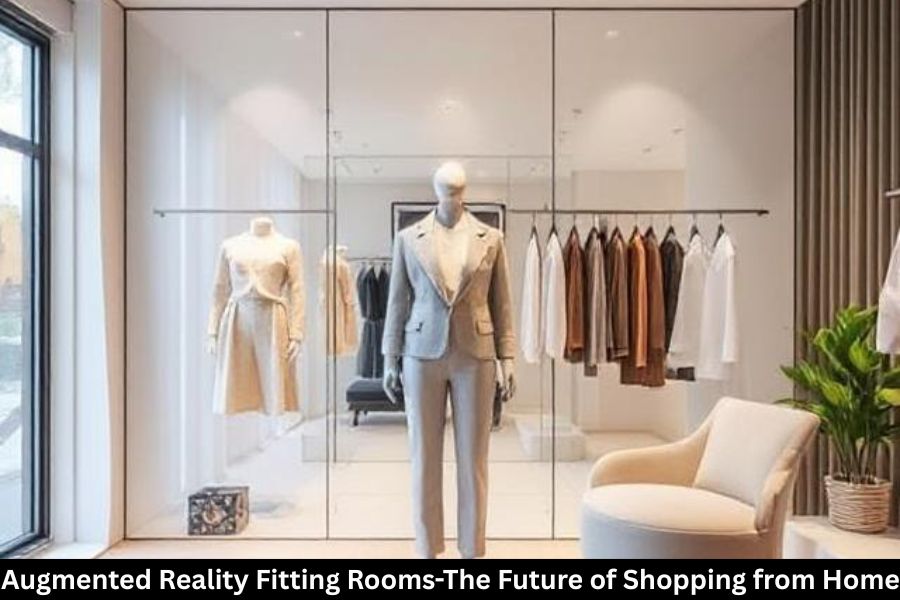
At their core, augmented reality fitting rooms allow customers to virtually try on clothing, accessories, and even makeup using a smartphone, tablet, or smart mirror. The technology overlays digital garments onto your live camera feed or onto a 3D avatar modeled after your body measurements. Think of it like a digital mirror that never lies about angles and gives you instant outfit swaps without stepping into a cramped store cubicle. You can rotate, move, and sometimes even see how fabrics flow as you walk.
AR vs VR in Retail
People often confuse AR (Augmented Reality) with VR (Virtual Reality), but they’re very different. VR transports you into a completely digital world, usually through a headset. AR, on the other hand, enhances your real-world view with digital elements. For retail, AR makes far more sense. You don’t want to escape reality when shopping—you want to see how something fits into your life, your body, and your space. AR keeps you grounded while adding the magic of visualization. That’s why retailers are betting big on AR instead of VR for e-commerce innovation.
🛒 Why AR Fitting Rooms Matter for Online Shopping
Let’s be honest: online shopping can feel like a gamble. You check the size chart three times, read reviews, and still wonder, “Will this actually fit me?” That uncertainty leads to abandoned carts and massive return rates. AR fitting rooms reduce that guesswork by showing you how clothes look on your specific body type. According to industry reports, over 60% of shoppers say they prefer retailers offering AR experiences because it boosts their buying confidence.
The Confidence Gap in E-Commerce
The biggest challenge in e-commerce is what experts call the “confidence gap.” Customers hesitate because they can’t physically interact with products. When AR fills that gap, something powerful happens: people feel in control. They aren’t just buying based on model photos—they’re buying based on their own reflection. That emotional assurance often turns browsing into purchasing. It’s like test-driving a car before buying; once you see it working for you, the decision feels natural.
📈 Market Growth and Adoption Trends
The global virtual fitting room market has been experiencing rapid growth. Industry analyses estimate the market is valued at several billion dollars and projected to grow at a strong double-digit annual rate over the next decade. Retailers recognize that AR is not just a novelty—it’s a revenue driver. Companies implementing AR try-on features report increased engagement times and higher conversion rates compared to traditional product pages.
Consumer Preferences
Millennials and Gen Z shoppers, who dominate online retail spending, expect interactive and personalized digital experiences. Surveys suggest that more than 70% of younger consumers prefer brands offering immersive technology like AR. These generations grew up with smartphones and social filters, so trying on digital clothes feels natural rather than futuristic. Retailers that fail to adopt such innovations risk appearing outdated.
Retailer Investments
Fashion brands worldwide are investing heavily in AR integration. Some reports indicate that businesses adopting virtual try-on technology have reduced product return rates by up to 30–40%. That’s a massive operational advantage, especially in fashion where returns are notoriously high. When you combine fewer returns with higher conversions, AR becomes not just a marketing tool but a cost-saving powerhouse.
🤖 How AR Fitting Rooms Work
Behind the scenes, AR fitting rooms rely on sophisticated combinations of computer vision, 3D modeling, and artificial intelligence. When you activate a try-on feature, your device camera scans your body dimensions and movement patterns. The system maps those measurements onto a digital framework to ensure garments align accurately with your shape.
3D Body Scanning
Modern AR tools use smartphone cameras or depth sensors to generate a realistic body model. Some advanced systems ask for height and weight inputs, while others calculate proportions automatically. The result is a digital version of you—your posture, proportions, and curves included.
Real-Time Garment Simulation
Once your body model is ready, garments are digitally draped over it using physics-based rendering. This means fabrics respond to movement, light, and gravity. When you turn sideways or lift your arm, the clothing adjusts in real time. That dynamic feedback gives shoppers a more authentic feel than static images ever could.
AI and Personalization
Artificial intelligence plays a major role in refining the experience. AI analyzes your browsing habits, purchase history, and body data to recommend accurate sizes and complementary items. Instead of scrolling endlessly, you receive curated suggestions tailored specifically to you. It feels less like shopping in a warehouse and more like having a personal stylist in your pocket.
✨ The Benefits of AR Fitting Rooms
The advantages of AR fitting rooms extend beyond convenience. They reshape customer behavior and retail economics in meaningful ways.
Increased Confidence in Purchases
When shoppers see clothing on themselves, they trust their decision more. Confidence translates directly into higher conversion rates. It’s similar to trying on clothes in-store but without the pressure of sales staff or waiting in line. That psychological comfort encourages decisive action.
Lower Return Rates
Fashion return rates can reach 30% or higher in traditional e-commerce. With AR try-on tools, that percentage drops significantly because customers better understand sizing and appearance before purchasing. Reduced returns mean lower shipping costs, fewer logistical headaches, and a smaller environmental footprint.
Cost and Time Savings
From the customer’s perspective, AR eliminates travel time, parking hassles, and fitting room queues. For retailers, it cuts expenses related to processing returns and restocking items. Both sides save money and time, making the shopping process more efficient overall.
🧵 Real-World Examples of AR Try-Ons Today
Many global fashion brands are already experimenting with AR-powered try-ons through apps and web integrations. Some integrate smart mirrors in physical stores, while others focus entirely on mobile experiences. These implementations often lead to higher engagement metrics and longer browsing sessions.
Fashion Brands Leading the Way
Luxury and mainstream fashion labels alike are using AR to enhance customer interaction. Virtual sneaker try-ons, digital eyewear previews, and makeup simulations are becoming increasingly common. Customers can switch colors instantly, compare styles side-by-side, and share their looks on social media.
Innovative Retail Experiments
Retail campaigns using AR have reported dramatic increases in product page engagement. In some cases, brands saw triple-digit percentage growth in interaction rates during AR-based promotions. These results prove that immersive shopping experiences drive attention and excitement.
📱 Social Media and AR Shopping
Social platforms have played a huge role in normalizing AR try-ons. Filters that let users preview sunglasses, lipstick shades, or hats blur the line between entertainment and commerce. When shopping feels playful and interactive, users are more likely to explore products.
AR Filters and Social Commerce
Social commerce thrives on shareability. AR features allow users to show friends how a product looks before buying. That social validation often speeds up purchase decisions. Retail is no longer a solo activity—it’s becoming collaborative and community-driven.
⚠️ Challenges and Limitations
No technology is perfect, and AR fitting rooms still face hurdles. Accuracy can vary depending on lighting, device quality, and body diversity. Some fabrics and complex designs remain challenging to simulate perfectly.
Accuracy Issues
While AR has improved significantly, predicting exact fit for every body type remains complex. Subtle differences in fabric stretch or tailoring may not always translate digitally. Continuous innovation in AI modeling aims to close this gap.
Technical and Privacy Concerns
Body scanning raises legitimate privacy questions. Retailers must ensure secure data storage and transparent policies. Trust will determine whether customers fully embrace AR fitting rooms at scale.
🌐 The Future of AR Fitting Rooms
The future looks exciting. Experts predict hyper-realistic avatars capable of mimicking skin texture, posture, and movement with remarkable precision. As 5G networks expand and smartphone cameras become more advanced, AR experiences will feel even smoother and more lifelike.
Hyper-Realistic Avatars and Digital Clothes
Digital fashion may become mainstream, with users buying outfits for virtual events and social platforms. Imagine owning both a physical jacket and its digital twin for online spaces. That hybrid model could redefine what “fashion ownership” means.
Omnichannel Integration
AR fitting rooms will likely connect online and offline experiences seamlessly. You might try something virtually at home, reserve it in-store, and finalize the purchase physically—or vice versa. The boundaries between digital and physical retail are fading fast.
Conclusion
Augmented reality fitting rooms represent a powerful evolution in e-commerce. They address the biggest pain point of online shopping—uncertainty—by replacing imagination with visualization. As adoption grows and technology advances, AR will move from being a competitive advantage to a standard expectation. Shopping from home is no longer passive scrolling; it’s becoming interactive, personalized, and immersive. The future of retail isn’t just online—it’s augmented.
FAQs
1. Are AR fitting rooms accurate enough for everyday shopping?
They are increasingly accurate thanks to AI and 3D modeling, though minor discrepancies can still occur depending on garment type and device quality.
2. Do AR fitting rooms really reduce returns?
Yes, retailers using AR technology have reported significant reductions in return rates, particularly in fashion categories.
3. Can AR fitting rooms work on any smartphone?
Most modern smartphones support AR features, though performance may vary based on camera quality and processing power.
4. Is personal data safe when using AR fitting rooms?
Reputable retailers implement strict data protection policies, but users should always review privacy terms before sharing body measurements.
5. Will AR replace physical fitting rooms completely?
Not entirely. Instead, AR will complement physical stores, creating a blended shopping experience across digital and in-person channels.