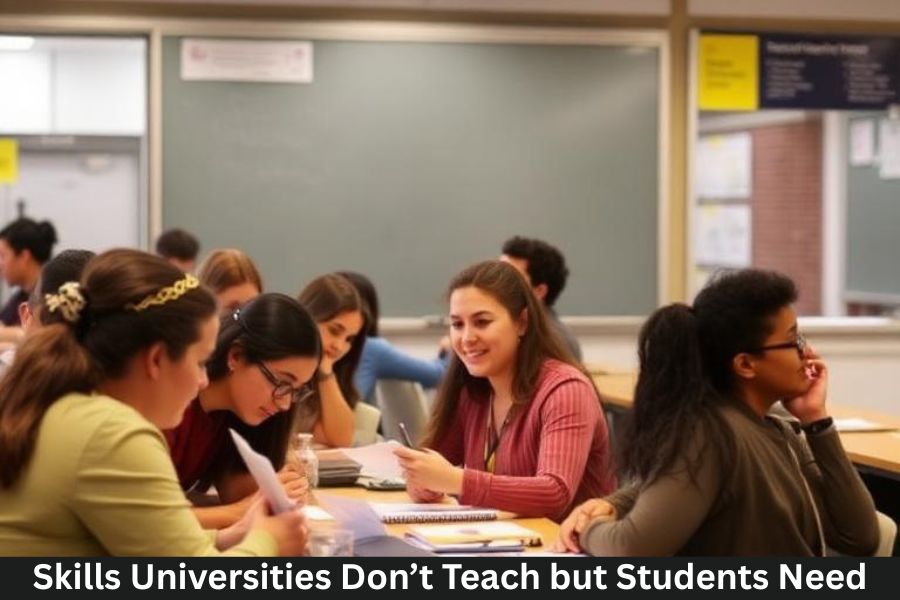
University education plays a crucial role in building academic knowledge and professional qualifications. However, despite offering specialized courses and technical training, many universities do not fully prepare students for the practical challenges of real life and the workplace.
While degrees open doors, certain essential life and career skills are often learned outside the classroom. In this article, we explore the key skills universities don’t teach but students need to succeed in today’s competitive and fast-changing world.
Financial Literacy
Most universities do not teach students how to manage personal finances effectively. Yet financial literacy is one of the most important life skills.
Students should understand:
- Budgeting and expense tracking
- Saving and investing basics
- Credit scores and loans
- Taxes and financial planning
Without financial knowledge, graduates may struggle with debt, poor spending habits, or long-term financial instability. Learning basic money management early can create lifelong benefits.
Emotional Intelligence
Academic success does not automatically translate into emotional intelligence. The ability to understand and manage emotions is crucial in both personal and professional settings.
Emotional intelligence includes:
- Self-awareness
- Empathy
- Conflict resolution
- Stress management
Workplaces value individuals who can collaborate effectively and maintain professionalism under pressure.
Negotiation Skills
Universities rarely teach students how to negotiate salaries, contracts, or workplace responsibilities. Yet negotiation plays a critical role in career growth.
Students should learn how to:
- Discuss salary offers confidently
- Negotiate promotions
- Handle business agreements
- Communicate value clearly
Strong negotiation skills can significantly impact long-term earnings and job satisfaction.
Networking Skills
Although universities provide opportunities to meet people, they often do not teach students how to network strategically.
Effective networking involves:
- Building meaningful professional relationships
- Maintaining connections
- Communicating professionally
- Leveraging social platforms like LinkedIn
Networking often leads to hidden job opportunities and mentorship.
Time and Energy Management
Time management is discussed in theory but rarely mastered in practice during university.
Beyond managing deadlines, students must learn:
- Prioritizing important tasks
- Avoiding burnout
- Balancing work and personal life
- Managing energy, not just time
In professional life, productivity depends heavily on managing both time and mental focus.
Adaptability and Resilience
The real world is unpredictable. Job markets shift, industries evolve, and unexpected challenges arise.
Universities may provide structured environments, but students need to develop:
- Adaptability to change
- Resilience during setbacks
- Ability to handle rejection
- Continuous learning mindset
These qualities are essential for long-term success.
Personal Branding
Universities teach how to earn degrees, but rarely how to build a personal brand.
Personal branding includes:
- Online presence management
- Professional portfolio creation
- Thought leadership
- Reputation building
In the digital age, employers often research candidates online before interviews. A strong personal brand can create new opportunities.
Practical Communication Skills
While presentations and assignments help improve communication, real-world professional communication is often more complex.
Students should master:
- Writing professional emails
- Handling difficult conversations
- Active listening
- Clear and concise reporting
Strong communication skills differentiate average performers from leaders.
Critical Decision-Making
In university, decisions are often guided by professors or structured rules. In real life, decisions carry higher risks and consequences.
Students need to develop:
- Risk assessment skills
- Analytical thinking
- Accountability for choices
- Long-term planning abilities
Good decision-making skills are key to leadership roles.
Sales and Persuasion Skills
Regardless of profession, everyone needs basic persuasion skills. Whether pitching an idea, convincing a client, or presenting a proposal, the ability to influence others matters.
Understanding principles popularized by books like How to Win Friends & Influence People can significantly enhance interpersonal effectiveness.
Sales skills are not just for salespeople—they are essential for career growth.
Stress and Mental Health Management
University environments can be stressful, but structured support often exists. In the real world, managing stress independently becomes crucial.
Students should learn:
- Coping mechanisms
- Work-life balance strategies
- Mindfulness practices
- When to seek professional help
Mental well-being directly affects productivity and long-term success.
Leadership Beyond Titles
Leadership is not limited to formal roles. Many universities offer leadership positions in clubs, but real leadership involves:
- Taking initiative
- Inspiring others
- Solving problems proactively
- Accepting responsibility
True leadership skills develop through experience and self-awareness.
Digital Literacy Beyond Academics
While students use technology for assignments, practical digital literacy goes beyond that.
Students should understand:
- Online privacy and cybersecurity basics
- Digital collaboration tools
- Remote work platforms
- Data interpretation
With remote work becoming common, digital competence is essential.
How Students Can Learn These Skills
Since universities may not formally teach these skills, students can develop them through:
- Internships and part-time jobs
- Online courses and workshops
- Reading self-development books
- Joining clubs and organizations
- Seeking mentorship
Proactive learning outside academic coursework is the key to becoming well-rounded and job-ready.
FAQs: Skills Universities Don’t Teach but Students Need
1. Why don’t universities teach these skills?
Universities primarily focus on academic and subject-specific knowledge. Life and soft skills often fall outside formal curricula.
2. Can these skills be learned after graduation?
Yes, but developing them during university gives students a competitive advantage.
3. Which skill is most important for career success?
There is no single most important skill, but communication, adaptability, and financial literacy are highly impactful.
4. How can students improve networking skills?
Attend industry events, connect professionally on LinkedIn, and maintain meaningful relationships.
5. Do employers value soft skills as much as technical skills?
Yes. Employers increasingly prioritize soft skills alongside technical competence.