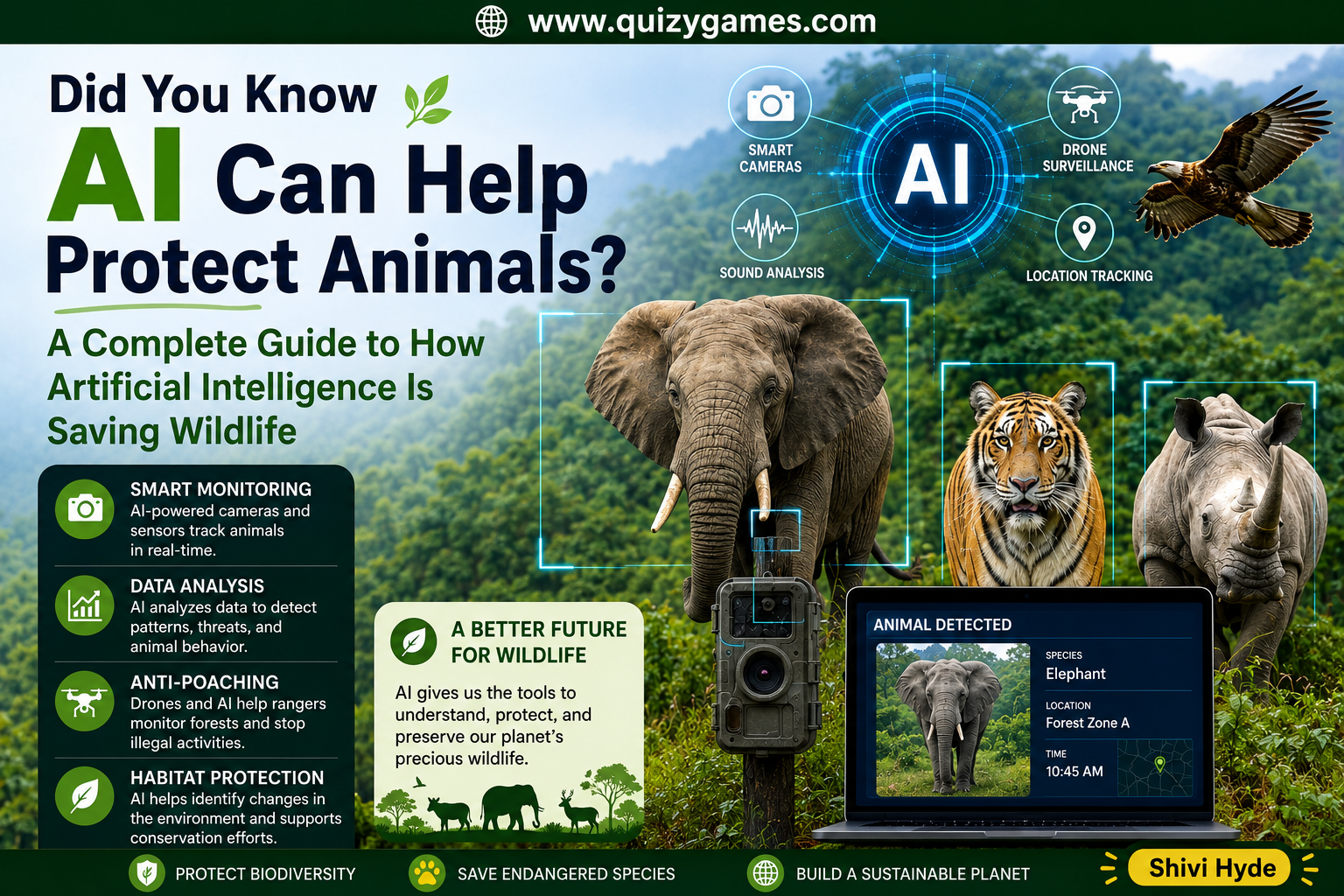
Artificial intelligence (AI) is changing almost every part of our lives, from healthcare and education to finance and transportation. But one of its most inspiring applications is something many people don’t realize—AI is helping protect animals and conserve wildlife around the world.
From identifying endangered species with camera traps to detecting illegal poaching in real time, AI is becoming a powerful ally for conservationists. As biodiversity continues to decline due to climate change, habitat destruction, pollution, and illegal wildlife trade, innovative technologies are playing a critical role in protecting the planet’s most vulnerable species.
In this guide, you’ll discover how AI helps save animals, real-world examples of AI in wildlife conservation, the benefits and challenges of using AI, and what the future looks like for technology-driven conservation.
Why Wildlife Conservation Needs Smarter Solutions
Wildlife populations are declining at an alarming rate. Thousands of species face threats from:
- Habitat destruction
- Climate change
- Illegal hunting and poaching
- Deforestation
- Ocean pollution
- Human-wildlife conflict
Conservation teams often work with limited funding, difficult terrain, and enormous areas to monitor. Traditional methods such as manual surveys and field observations are effective but require significant time and manpower.
This is where AI becomes incredibly valuable.
Artificial intelligence can analyze enormous amounts of environmental data much faster than humans, allowing researchers to detect problems earlier and make better conservation decisions.
What Is AI in Wildlife Conservation?
Artificial intelligence in wildlife conservation refers to the use of machine learning, computer vision, predictive analytics, and automation to monitor, protect, and study animals.
Instead of replacing conservationists, AI works alongside them by processing millions of images, sounds, satellite photos, and environmental records in a fraction of the time.
Some common AI technologies include:
- Computer vision
- Machine learning
- Deep learning
- Drone automation
- Acoustic monitoring
- Satellite image analysis
- Predictive analytics
Together, these technologies provide faster and more accurate insights into wildlife populations.
How AI Helps Protect Animals
AI Identifies Animals from Camera Trap Images
Conservation organizations place thousands of motion-sensitive cameras throughout forests and national parks.
These cameras capture millions of photographs every year.
Sorting through these images manually can take months.
AI-powered image recognition systems automatically:
- Detect animals
- Identify species
- Count individuals
- Recognize behavior
- Filter empty images
This saves researchers hundreds of hours while improving accuracy.
AI Helps Stop Poachers
Illegal wildlife trafficking remains one of the biggest threats to endangered animals.
AI helps by predicting where poachers are most likely to strike.
Machine learning analyzes factors such as:
- Previous poaching incidents
- Animal migration routes
- Road access
- Weather conditions
- Ranger patrol history
The system recommends patrol routes that maximize protection.
As a result, wildlife rangers can patrol smarter instead of simply covering random areas.
AI Uses Drones for Wildlife Monitoring
Faster Aerial Surveys
Drones equipped with AI cameras can monitor large habitats without disturbing animals.
These drones can:
- Count elephants
- Locate rhinos
- Track whales
- Detect forest fires
- Monitor nesting birds
Compared to helicopters, drones are less expensive and much quieter.
Detecting Illegal Activities
AI-equipped drones can recognize:
- Unauthorized vehicles
- Human movement
- Illegal camps
- Logging activities
- Fishing boats in protected waters
Authorities receive alerts almost immediately.
AI Listens to Nature
One fascinating application of AI involves listening instead of watching.
Researchers place smart audio sensors throughout forests and oceans.
These microphones record:
- Bird songs
- Whale calls
- Frog sounds
- Gunshots
- Chainsaws
AI analyzes the recordings and quickly identifies unusual sounds.
For example, if chainsaws are detected inside a protected rainforest, authorities can investigate before large-scale logging occurs.
Similarly, AI can detect gunshots, helping prevent poaching.
AI Tracks Animal Migration
Many species travel thousands of miles every year.
Examples include:
- Sea turtles
- Birds
- Whales
- Caribou
- Elephants
AI combines GPS tracking with satellite data to understand migration routes.
This information helps governments:
- Protect migration corridors
- Build wildlife crossings
- Reduce vehicle collisions
- Preserve breeding grounds
Better data leads to smarter conservation planning.
AI Helps Save Marine Life
The ocean covers over 70% of Earth, making marine conservation especially challenging.
AI is helping protect sea life in several ways.
Monitoring Coral Reefs
Underwater cameras use AI to:
- Detect coral bleaching
- Measure reef health
- Identify fish populations
- Monitor biodiversity
Scientists can respond earlier when coral reefs begin to decline.
Reducing Illegal Fishing
Satellite imagery combined with AI detects suspicious fishing vessels operating in protected waters.
Authorities can identify illegal fishing activities much faster than before.
Protecting Whales
AI analyzes underwater sounds to identify whale species and track migration patterns.
Ships can then avoid collision-prone areas during migration seasons.
AI Helps Rescue Endangered Species
Many endangered species are difficult to locate because they live in remote habitats.
AI helps conservationists find rare animals without disturbing them.
Examples include:
- Snow leopards
- Tigers
- Orangutans
- Giant pandas
- Black rhinos
By identifying their locations more accurately, conservation teams can improve protection efforts.
AI Predicts Disease Outbreaks in Wildlife
Wildlife diseases can spread rapidly and sometimes affect humans.
AI analyzes environmental data to predict outbreaks before they become widespread.
Researchers monitor factors such as:
- Temperature
- Rainfall
- Animal movement
- Population density
- Water quality
Early detection allows wildlife experts to respond faster and reduce disease transmission.
AI Helps Reduce Human-Wildlife Conflict
Conflicts between people and wildlife often occur near farms and villages.
Examples include elephants damaging crops or predators attacking livestock.
AI systems can detect approaching animals using:
- Smart cameras
- Thermal imaging
- Motion sensors
- GPS tracking
Farmers receive alerts, giving them time to safely protect both themselves and the animals.
This reduces unnecessary harm on both sides.
Real-World Examples of AI Protecting Animals
Elephant Conservation
AI-powered drones monitor elephant populations across African reserves.
They help identify injured animals and detect suspicious human activity.
Tiger Monitoring
Camera traps with AI recognize individual tigers using their unique stripe patterns.
Researchers can estimate populations more accurately.
Whale Protection
AI systems analyze underwater sounds to detect whale movements, helping ships avoid collisions.
Penguin Research
Researchers use AI to analyze satellite images and estimate penguin populations without physically disturbing nesting colonies.
Bird Conservation
Smart audio systems identify bird species by their songs, even in dense forests where visual monitoring is difficult.
Benefits of Using AI in Wildlife Conservation
Artificial intelligence offers several advantages.
Saves Time
Millions of images and recordings can be analyzed within hours instead of months.
Improves Accuracy
AI reduces human error in species identification and population estimates.
Covers Large Areas
Drones and satellites can monitor remote regions that are difficult for humans to access.
Reduces Costs
Automation lowers the need for extensive manual data processing.
Supports Better Decisions
Real-time insights help conservation organizations respond more quickly to emerging threats.
Challenges of Using AI for Wildlife Protection
Although AI is extremely promising, it is not a perfect solution.
Some challenges include:
High Initial Costs
Developing AI systems and purchasing drones, cameras, and sensors can be expensive.
Data Quality
AI performs best when trained using high-quality data. Poor data can reduce accuracy.
Technical Expertise
Conservation teams may require specialized training to operate AI systems effectively.
Infrastructure Limitations
Remote wildlife habitats often lack reliable internet connectivity and electricity.
Privacy and Ethical Concerns
Monitoring technologies should be used responsibly to avoid unintended impacts on local communities.
The Future of AI in Wildlife Conservation
The future looks incredibly promising.
Emerging innovations include:
Smarter Satellites
Future satellites will detect environmental changes with even greater precision.
Autonomous Conservation Robots
Robots may one day patrol protected areas and collect ecological data independently.
Improved Species Recognition
AI models will identify more species with higher accuracy, even from partial images or sounds.
Climate Change Monitoring
AI will help scientists predict how climate change affects wildlife habitats and migration patterns.
Global Conservation Networks
Researchers worldwide will share AI-generated data, creating faster and more coordinated conservation efforts.
How You Can Support AI-Powered Wildlife Conservation
Even if you’re not a scientist, you can contribute to protecting wildlife.
Here are a few ways:
- Support wildlife conservation organizations using technology.
- Donate to projects focused on endangered species.
- Reduce plastic waste to protect marine animals.
- Choose sustainable products.
- Spread awareness about AI’s role in conservation.
- Volunteer with local environmental groups.
- Participate in citizen science programs that collect wildlife data.
Every small action contributes to preserving biodiversity for future generations.
Final Thoughts
Artificial intelligence is proving that technology can do much more than simplify everyday tasks—it can help protect the natural world. From identifying endangered animals and monitoring habitats to preventing poaching and tracking migration, AI is transforming wildlife conservation in remarkable ways.
While challenges such as cost, infrastructure, and ethical considerations remain, the benefits of AI far outweigh the limitations. By combining human expertise with intelligent technology, conservationists can make faster, more informed decisions that give endangered species a better chance of survival.
As AI continues to evolve, it will become an even more powerful tool in safeguarding Earth’s wildlife. Supporting these innovations today means helping create a healthier, more sustainable future for animals and the ecosystems they call home.
Frequently Asked Questions (FAQs)
1. How does AI help protect endangered animals?
AI helps by identifying species from camera images, tracking animal movements, detecting poaching activities, analyzing environmental data, and monitoring habitats more efficiently than traditional methods.
2. Can AI prevent wildlife poaching?
Yes. AI analyzes historical data, predicts high-risk poaching locations, monitors protected areas with drones and cameras, and sends real-time alerts to wildlife rangers.
3. Is AI used in marine conservation?
Absolutely. AI monitors coral reefs, tracks whales, detects illegal fishing, analyzes underwater sounds, and helps scientists better understand marine ecosystems.
4. What technologies are commonly used in AI wildlife conservation?
The most common technologies include machine learning, computer vision, drones, GPS tracking, satellite imagery, acoustic sensors, thermal cameras, and predictive analytics.
5. Will AI replace wildlife conservationists?
No. AI is designed to assist conservationists, not replace them. It automates repetitive tasks, analyzes large datasets quickly, and provides valuable insights, while human experts continue to make critical conservation decisions.
Read More : AI vs Human Brain